
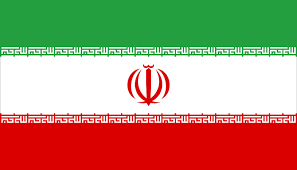
On January 23, students and community members at Virginia Tech held a largely silent demonstration in support of the Iranian people, featuring signs, monarchist flags, and calls for freedom. The protest was concentrated outside of Newman Library and at the Pylons.
Virginia Tech’s Iran protests are just one component of a wider international movement, with a major national solidarity rally recently assembling in Washington, DC.
Virginia Tech Provost Julie Ross issued a statement, acknowledging that “recent unrest and reports of violence against demonstrators in Iran have been deeply distressing for many members of our university community.” Ross encouraged faculty to be flexible with affected students and to provide support and understanding. The protests may very well mark a turning point in modern Iranian history or at least reflect a level of popular mobilization not seen since, ironically enough, the 1970s.
The Historical Context
Before 1978, Iran was ruled by the Pahlavi monarchy, a dynasty that took power in 1925, after it, with the approval of the British, deposed the Qajar Dynasty of Iran.
Following the Second World War, Mohammad Reza Shah Pahlavi, the second Pahlavi monarch, was the ruler of Iran. Pahlavi consolidated power in Iran following the exit of Western and Soviet troops, and launched the White Revolution, which was a series of modernizing reforms, land reform, women’s suffrage, and investment in infrastructure.
The Shah wanted to create a middle class from the Iranian peasantry that would be loyal to him, while redistributing the wealth of the aristocratic landlord class in the process, though he compensated the aristocracy with shares of newly privatized factories, which were previously state-owned operations. However, these Westernization and modernization efforts were not accompanied by thorough political reforms.
Economic growth slowed following the plateauing of oil prices (which the Iranian economy relied on too heavily), inflation eroded the middle class’s purchasing power, and unemployment rose. At the same time, the Iranian people lacked meaningful political representatives, while the traditional aristocratic barrier between the monarchy and its citizens had already been torn down, leaving a newly mobilized society with no peaceful outlet for dissent.
Many, including intellectuals in academia, were repressed by the Shah’s secret police, SAVAK. Likewise, the Islamic clergy and traditional mercantile classes joined forces, as they both found a common enemy through their opposition to land reform and the influx of Western customs, clothing, food, technologies, and entertainment, and they perceived the Shah as a client of American and Israeli interests.
The Pahlavis’ personal and familial extravagance stood in stark contrast to inflation, unemployment, and the crippling of the traditional bazaar economy. The Shah unintentionally created a structurally coherent, massive opposition force to his rule.
All these sectors of Iranian society thus turned against the monarchy as the 1979 protest movement broke out, and Ayatollah Ruhollah Khomeini, a prominent anti-Shah Islamic clergyman, came to lead Iran into the Islamic Revolution. Khomeini proclaimed the Islamic Republic of Iran on March 31, 1979, a state which he envisioned as pointing, “neither East, nor West, but [toward] Islam.”
But, nearly five decades later, the Islamic Republic finds itself facing a similar situation. What began as economic demonstrations in Tehran in December 2025, due to the collapse of the Iranian currency, has since turned into massive, nationwide protests as inflation soars above 40%, and food prices rise by 70%.
Millions have taken to the streets in Iran, chanting “Marg bar dictator,” or “Death to the dictator,” aimed at Supreme Leader Ali Khamenei. The Islamic Republic has responded with violent crackdowns using live ammunition, tear gas, and mass arrests, not unlike the military response by the Shah in the 1970s.
Casualty figures are still highly contested due to nationwide blackouts and media restrictions. Estimates from human rights organizations and international outlets range from several thousand to well into the tens of thousands of deaths, while Iranian officials have acknowledged at least 5,000 fatalities, including hundreds of security personnel. Regardless of the precise number, the scale of repression makes this one of the bloodiest examples of state violence in modern Iranian history.
The 1970s All Over Again?
What is bitterly ironic, however, is that, despite the large ideological differences, it seems the Islamic Republic has reproduced many of the Pahlavi regime’s structural failures. It has grown heavily dependent on oil revenue, tolerated corruption, and governed through a narrow political class insulated from the people, much like the Shah’s government.
Most disastrously, it has further mismanaged the political representation and expectations of the Iranian middle class. Exiled Crown Prince Reza Pahlavi, the son of the deposed Shah, has attempted to signal his willingness to return to Iran, but it is unclear whether he would be accepted should a true Second Iranian Revolution break out. What is clear is that the prerevolutionary Lion and Sun flag associated with the Pahlavi monarchy has become a symbol of protest against the Islamic government in Iran.
Now, though these protests are large, Iran has seen several major protests against the Islamic Republic in the past, including the 1999 student protests, the 2009 Green Movement protests, the 2017 economic protests, the 2019 fuel price protests, and the 2022 Woman, Life, Freedom movement started after the death of Mahsa Amini, a Kurdish-Iranian woman who was detained for wearing a hijab incorrectly.
But, unlike the Islamic Revolution, these anti-Islamic-Republic protests have all faced severe, and in this case, united repression from the security forces, and, crucially, have lacked a similar unified leadership and ideological vision to that of the Islamic Revolutionaries had in Khomeini and Radical Shia Islam.
Still, there is potential for legitimate upheaval in Iran. Unlike in the past, the Iran of today operates in a far more urbanized, literate, and globally connected society. Furthermore, President Donald Trump has threatened military intervention, and the United Kingdom has levied sanctions against Iran.
Any abrupt collapse of the Islamic Republic, however, would risk creating a dangerous power vacuum. Iran is ethnically diverse and has powerful, entrenched economic and military interests, as well as a strong security force. Without a similarly strong, united, organized, and ideologically motivated movement with a clear figurehead, it is unlikely that a post-Islamic-Republic Iran could return to the stable position in the Middle East it held under the Pahlavis.
We have seen past interventions in the region, in nations such as Iraq, Afghanistan, and Syria, which have tended to produce fragmentation and radicalization. While a secular Iran may appeal to outside powers, particularly in the West, as a potential source of strategic depth in an unstable region, it’s clear that the future of Iran may ultimately depend on the will of the Iranians themselves.
For Virginia Tech students and faculty, these demonstrations show how global political ruptures reverberate through our local community. While they may seem like distant or abstract political crises, for many on campus, they have a direct and profound effect.

Jacob Taylor is a writer for Hokie Stone Press. He is a sophomore studying Civil Engineering at Virginia Tech. Jacob is an avid writer, amateur historian, and enjoys reading philosophy.